New London Power Squadron currently offers 2 hour seminars on a variety of topics of interest to today's recreational boater. The seminars are free but there is a charge for books/charts/CD-Rom's etc. The cost is between $25-$35 depending on the seminar (including applicable sales taxes). These seminars will be offered to the public periodically based upon demand.
New London Power Squadron will also teach any of these seminars to your group or organization of 5 or more. Contact us for details.
Listed below are the seminar descriptions and links to be notified when the seminar schedule is finalized.
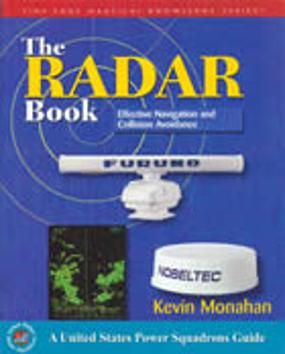
Marine RADAR
This seminar covers how radar functions, radar selection, operation of the radar under various conditions including setting of controls, display interpretation, basic navigation, and collision avoidance using radar. The kit includes The Radar Book written by Kevin Monahan ($25 retail) and Student Notes with copies of slides.
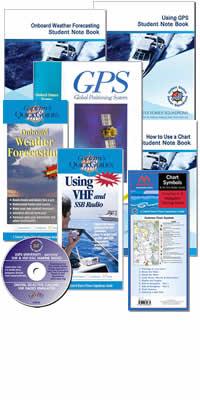
VHF radio is the mainstay of coastal communication and essential for emergency communications. Digital Selective Calling (DSC) is rapidly becoming a reality as more Coast Guard Rescue 21 System operations go live. Currently, the mid Atlantic coast is operational with DSC. The Gulf region will be operational early next year and all Cutters will be DSC equipped by next year.
DSC vastly simplifies and improves rescue and routine call signaling – making it easier to make a call while the system frees up Channel 16 for essential communications. However, you need to know how to use it. This seminar answers those needs and explains basic VHF operation. A CD is included with a DSC Simulator that allows you to practice on your computer at home. A handy waterproof McGraw-Hill Captain’s Quick Guide Using VHF is included with essential information that you should have aboard, which will explain to anyone on your crew how to use the radio.
GPS has become a common tool for navigation. However using GPS on the water is distinctly different from a moving map display in your car. This seminar explains the principles of waypoint navigation which you will use. It then shows you how to relate the GPS to your charts which provide essential information about what is around you.
The seminar also shows you how to operate your GPS – what the buttons do, what the screens show, and how to access the functions you need. A handheld GPS is used as the demonstration model, but all GPS receivers function similarly. By the time you have completed the seminar, you will be able to store waypoints into your GPS, activate them for navigation, and use GPS to keep you on a safe, pre-qualified course of your choosing. You’ll also get some tips for choosing a GPS if you don’t currently own one. You will get a copy of the USPS Guide Using GPS and a waterproof McGraw-Hill Captain’s Quick Guide Using GPS to take aboard to remind you of the steps, or to show another of your crew how to use your GPS
Today, electronics have radically changed navigation, but understanding the basics helps you gain confidence in your equipment and your own skills.
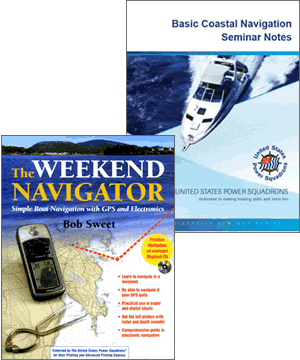
In this seminar, you will learn practical techniques to plan, navigate, and check your progress on the water. You will develop situational awareness skills using your eyes and navigation tools to quickly point to your position on a chart, and be able to use backup techniques when the electronics become suspect. This seminar will help captain and crew navigate safely and comfortably.
The student kit contains The Weekend Navigator textbook, a Seminar Notes booklet, and Maptech's Chart Navigator Training CD, which includes software and digital charts to gain familiarity with this new technology.
Not Currently Offered
Contact us to arrange this Seminar for your Group
Partner In Command
This seminar provides an introduction to boating for crew members who need basic information and who may or may not have taken a boating course. It is designed to provide essential information one may require to assist a skipper in the safe operation of a recreational boat. Included in the seminar are actions in response to emergencies. This seminar includes a text. A Knot Board will be useful to practice tying knots.
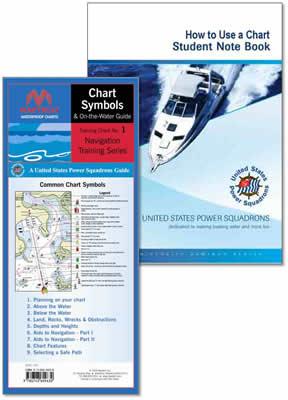
Charts provide information essential to your safety afloat. Even with GPS and electronic navigation, the chart is needed to tell you what is around you and between you and your intended destination. A system of symbols is used by cartographers to tell you what lies below the surface of the water and the depths of water. There is key information about visible landmarks and navigation aids to help you navigate your course. The chart also is your link with the GPS via its grid scale, compass rose, and distance scales. A brief introduction to latitude and longitude provides insight to the operation of GPS receivers.
The NOAA Chart No. 1 is the quintessential reference to chart details, but is very difficult to understand. This seminar walks you through what you really need to know in an entertaining and interesting fashion, and provides you with a Maptech Waterproof flip-fold waterproof Chart Symbols and On-the-Water Guide to take along on the boat with you. In addition to showing you all about your chart, this seminar walks you through the essentials of laying out a safe course, steps to measure a course with the USPS plotter, and even a quick guide to the rules of the road.
If you would liked to be kept informed of schedules and location click here
Onboard Weather Forecasting
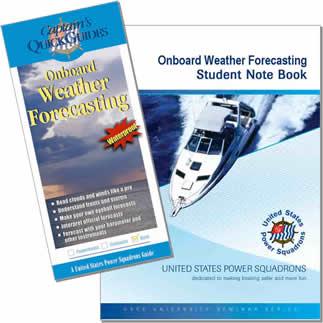
Changing weather conditions can convert what was a delightful day on the water into a real challenge. Forecasting what weather you will encounter is one of the top priorities for safe boating. Should we go out? When should we come in? These are important questions, but some fundamental understanding of the weather can help you make these decisions. That’s what this seminar is all about.
While not a course in weather, this seminar explains how just using your own senses can help you determine what conditions you will encounter where you are. By all means, a forecast is important. It will tell you what weather systems are headed your way, but they are challenged to tell exactly where and when conditions will change. Add your own observations and you have an extra edge. Add a couple of instruments and you can verify your observations. The seminar explains weather systems, how to understand clouds and their changes, using changing wind direction, temperature, and pressure to hone in on emerging weather fronts. The seminar includes the McGraw-Hill Onboard Weather Forecasting waterproof Captain’s Quick Guide to take aboard your boat.
This seminar shows boaters how to depart and dock under a variety of conditions as well as all about trimming the boat underway. The seminar materials include a waterproof USPS Captain's Quick Guide and Student Notes.
If you would liked to be kept informed of schedules and location click here
Sail Trim and Rig Tuning
This seminar shows in clear and simple terms how to use and adjust sails for optimum performance under a wide range of conditions. The seminar comes with a waterproof USPS Captain's Quick Guide written by North Sails and Student Notes.
If you would liked to be kept informed of schedules and location click here
Paddle Smart
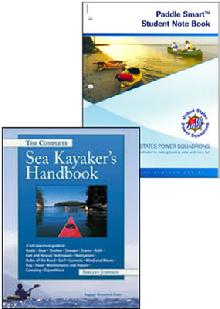
Welcome to the world of paddlesports. You have joined (or soon will) the fastest growing part of boating. According to the National Marine Manufacturers Association, kayaks and canoes accounted for some 54% of new boats sold in 2006 - over 493,000 crafts. Kayaking, canoeing or rowing are enjoyable opportunities to get close to nature, have a great time, and get some quality exercise in the process. This seminar is intended for those about to join the sport and those considering purchasing paddling equipment.The seminar kit includes several handouts:
attendee workbook for note-taking and reference
"The Complete Sea Kayaker's Handbook" by Shelly Johnson (msrp $18.95)
Optionally available but not part of the basic kit: "Introduction to Paddling - canoeing basics for lakes and rivers" by the American Canoe Association.Topics discussed in the seminar include terminology, minimum and optional equipment, using paddle craft-both kayaks and canoes, safety practices including video clip examples, date tripping and touring considerations, and also a few statistics.
If you would liked to be kept informed of schedules and location click here
TIDES AND CURRENTS
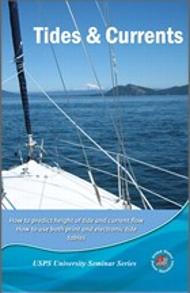
Cruise confidently in coastal waters, secure in your knowledge of tidal conditions. Even if you are an inland boater, you may travel to an area where knowing about tides and tidal currents is important. Discover what causes the tides to rise and fall and what causes the currents to flow. Learn where to find sources of information about tides and tidal currents, simple ways to predict height of tide and speed of current flow and how to use both print and electronic tide tables. Learn about how tides and currents affect your boat’s performance from experienced coastal boaters.
Each student receives a full color Student Guide for this two-hour seminar.
What's Included?
Causes and effects of tides and currents
Predict the time of highest tide before it begins to fall
Predict the vertical movement of the water
Safely navigate low tide
Determine the speed of the current and when it reaches maximum flood